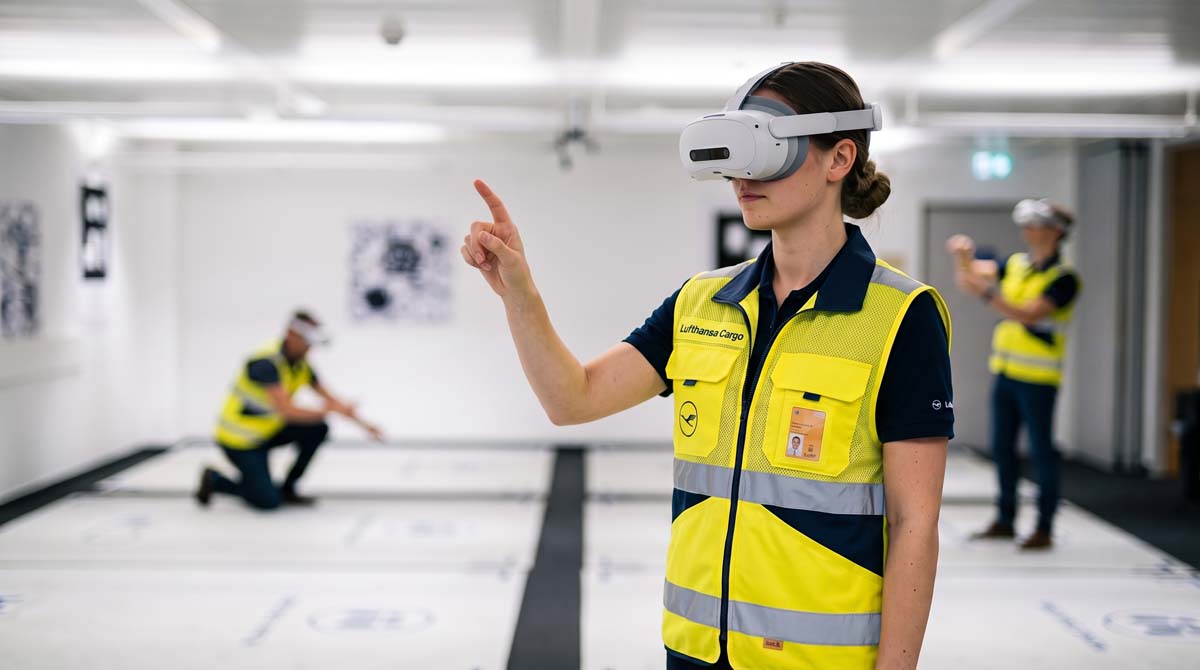
The NMY success story demonstrates how our LBA-certified XR ecosystem transformed a global enterprise’s mandatory training program into a highly scalable digital architecture through state-of-the-art Lufthansa XR training. As a long-standing strategic IT framework partner of Lufthansa Group, NMY delivered the world’s first examination environment for VR training officially approved by the German Federal Aviation Authority (Luftfahrt-Bundesamt, LBA).
> 75%
CapEx Savings
- Complete substitution of physical mock-ups and simulators.
~80%
Reduced Travel Costs
- Trainers examine global crews remotely via NMY System Operator.
–50%
Operational Errors
- Drastic reduction in ramp damages through immersive stress training.
The Problem: The Cost Trap of Analog Classroom Training
Scaling Limits and Uncompromising Compliance Across an Aviation Group
Lufthansa Group moves more than 100,000 employees worldwide. Whether in the cockpit, in the cabin, or during ground handling on the tarmac: every crew member must complete mandatory safety and compliance training strictly supervised by aviation authorities such as the German Federal Aviation Authority (Luftfahrt-Bundesamt, LBA).
The regulatory principle is uncompromising: without a valid certificate, the license to operate expires immediately, and the crew roster system automatically blocks the individuals concerned from flight operations. To handle this massive volume of qualifications, the group traditionally relied on physical training centers. This analog model ran into four costly limitations:
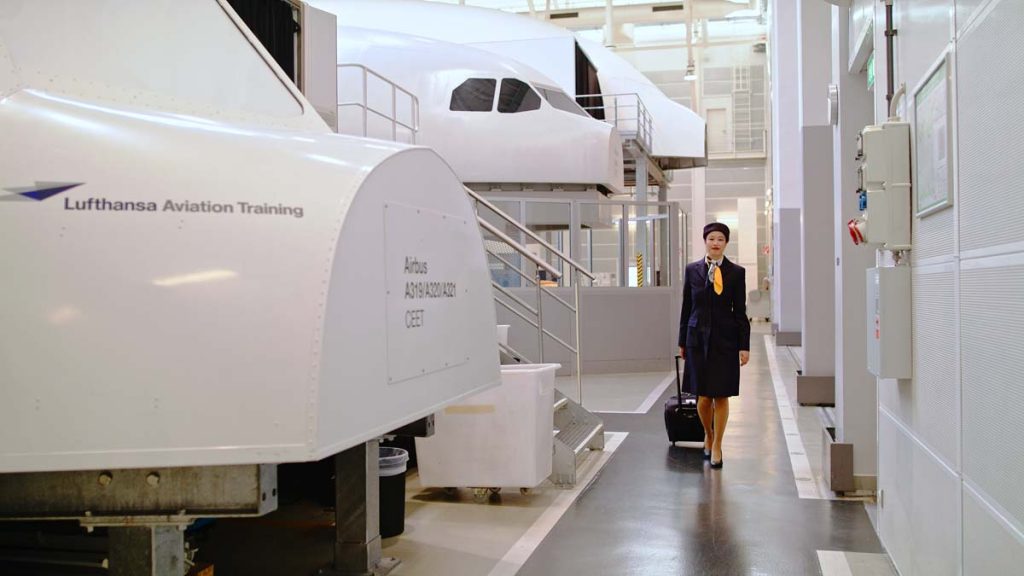
Space-Intensive Hardware & Simulators:
- True-to-scale cabin mock-ups and simulators occupy hundreds of square meters of facility space, cost millions to procure, and require complex physical retrofits with every fleet transition.
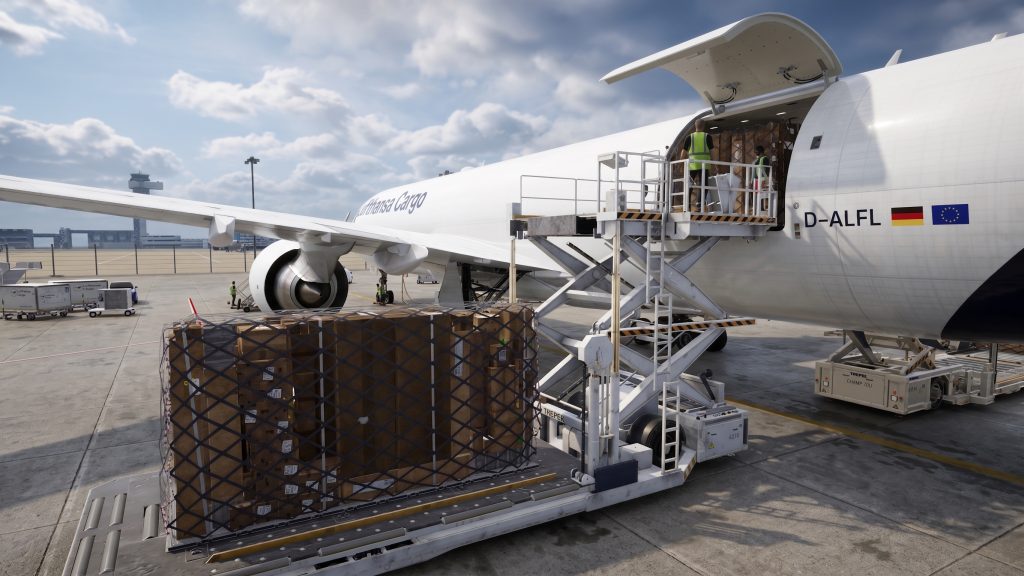
Downtime – Blocking Productive Assets
- For technical training, real passenger aircraft and costly apron equipment had to be taken out of active operations—an expensive downtime for revenue-generating assets.
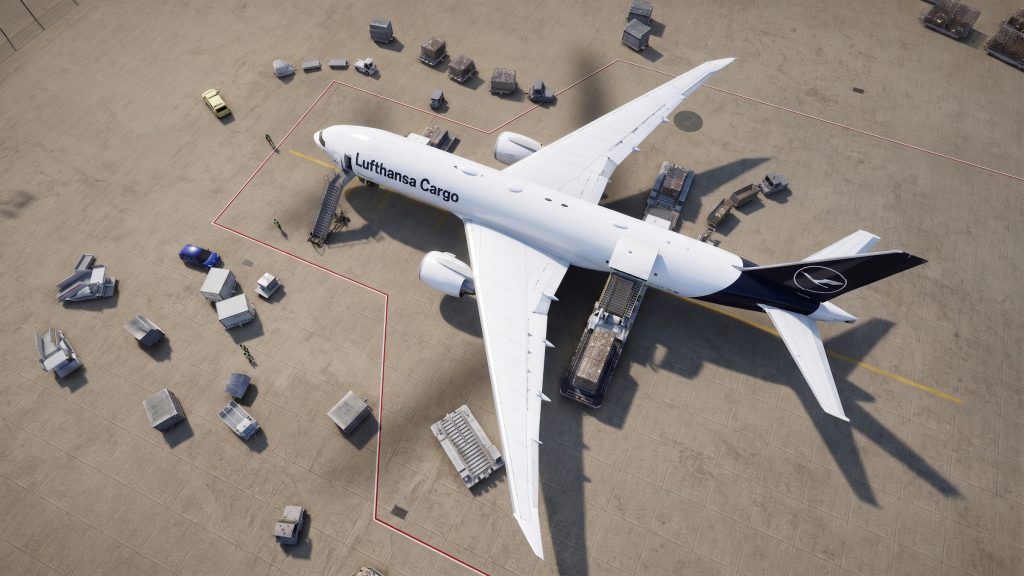
Global Travel & Downtime:
- Thousands of crew members traveled to centralized training facilities. Alongside substantial flight and hotel expenses, personnel were unproductively sidelined from scheduled flight operations throughout their entire transit time.
Critical Trainer Bottleneck:
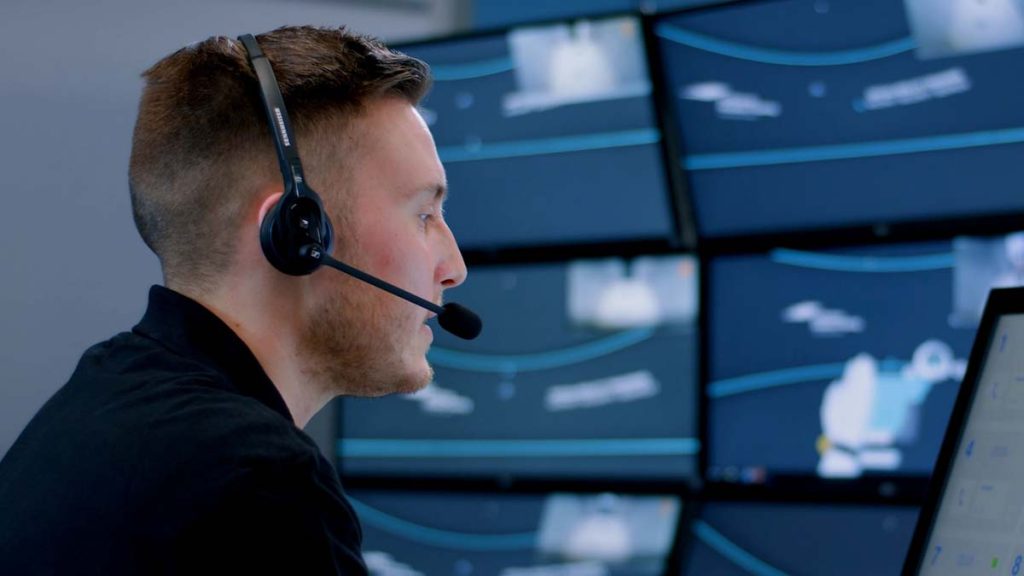
- Highly qualified instructors spent valuable working hours traveling or, bound to physical locations, trained only small groups.
The Solution: NMY’s LBA-Certified XR Architecture
As Lufthansa Group’s strategic IT framework partner for 3D, VR, and XR solutions, we transitioned their qualification programs into a highly scalable digital architecture—eliminating the need to tie training to expensive physical mock-ups and active aircraft.
Application Development
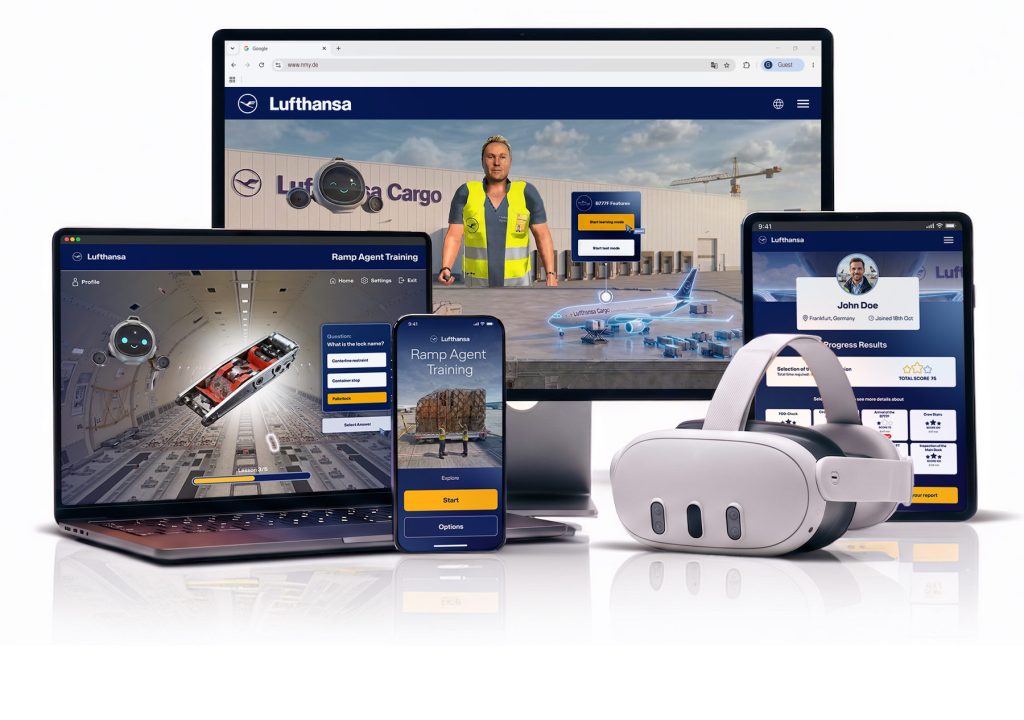
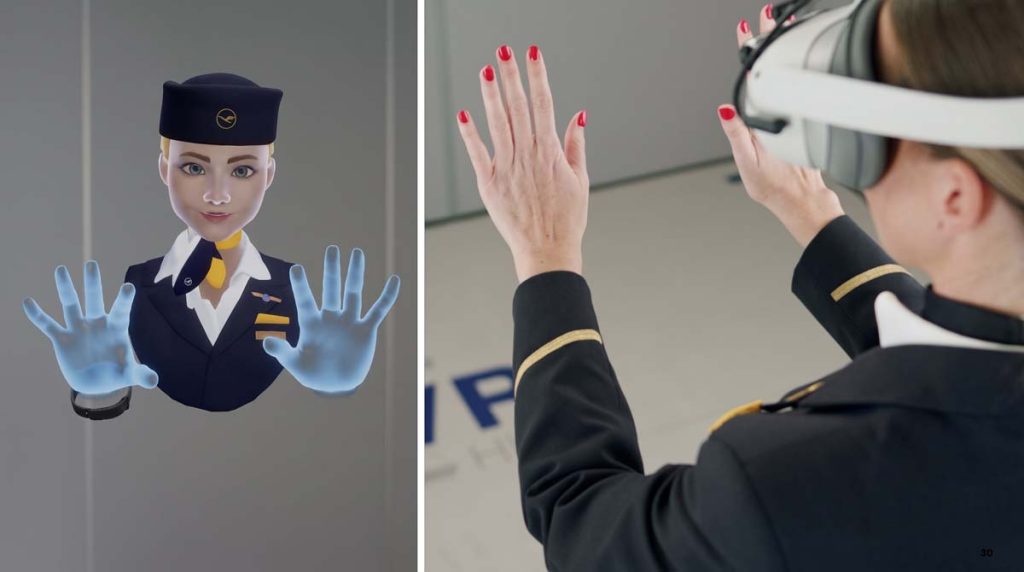
We reconstructed real aircraft and cabin sections as high-precision digital 3D twins and integrated them into an enterprise software ecosystem. Employees put on standalone VR headsets and train safety-critical procedures within a realistic virtual environment—navigated naturally and without an onboarding curve via controller-free hand tracking.
The Regulatory Breakthrough
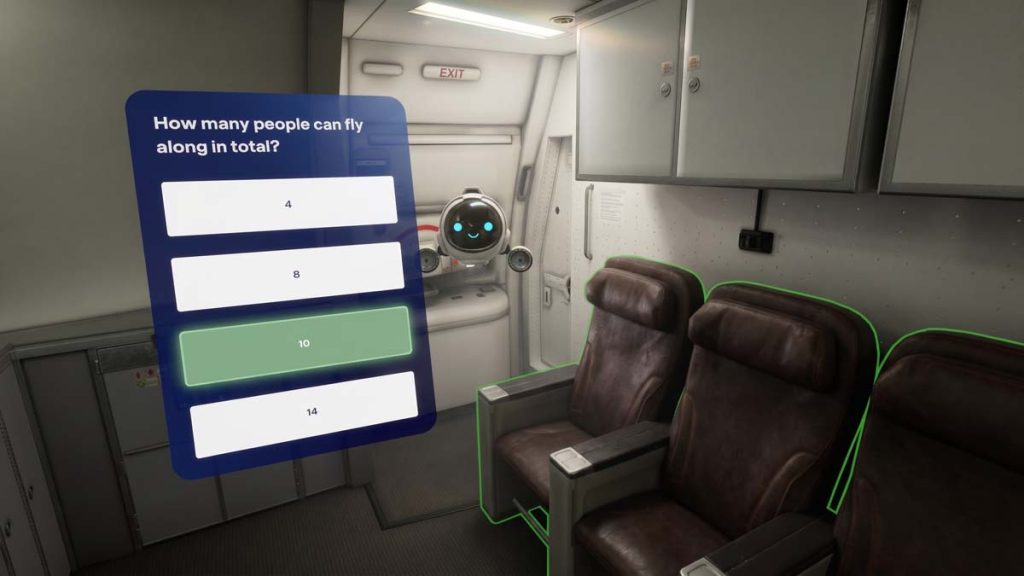
The German Federal Aviation Authority (Luftfahrt-Bundesamt, LBA) officially certified the software developed by NMY as a legally valid examination medium. Flight crews now complete mandatory official examinations entirely in Virtual Reality. The system assesses exam attempts objectively and automatically, synchronizing cleared licenses in real time directly with the Learning Management System (LMS) and crew rostering—with zero manual administrative effort.
Proof of Impact: The Two Flagship Projects
The economic impact of this architecture is proven in the daily, continuous operation of two key applications:
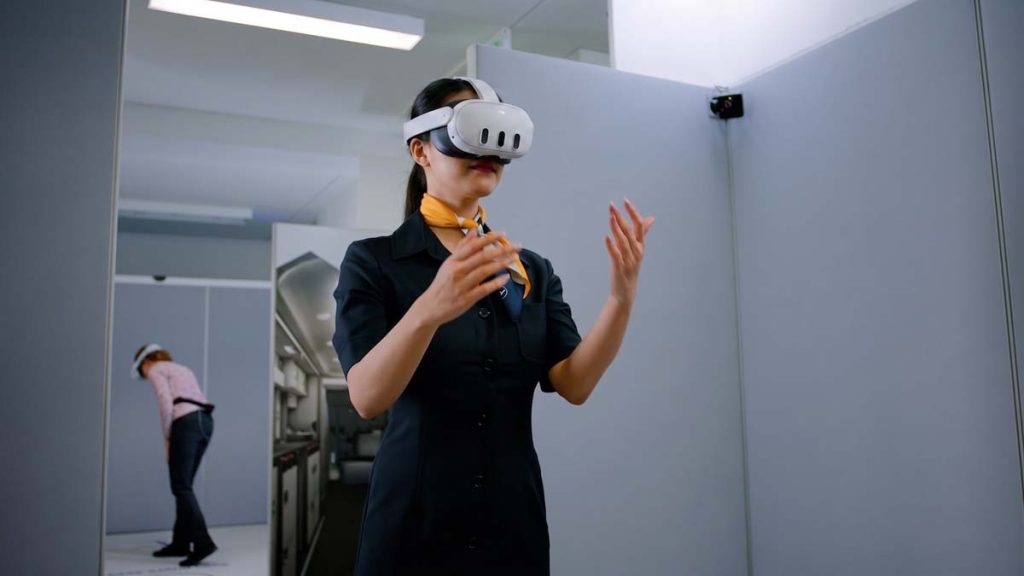
Aircraft Security Training
Lufthansa Group – Compliance & Automation
In this mandatory safety domain, flight crews train for emergency procedures, security checks, and statutory on-board processes. Training on costly physical mock-ups has been completely replaced.
- 20,000+ automated mandatory training sessions / year with > 75% CapEx savings.
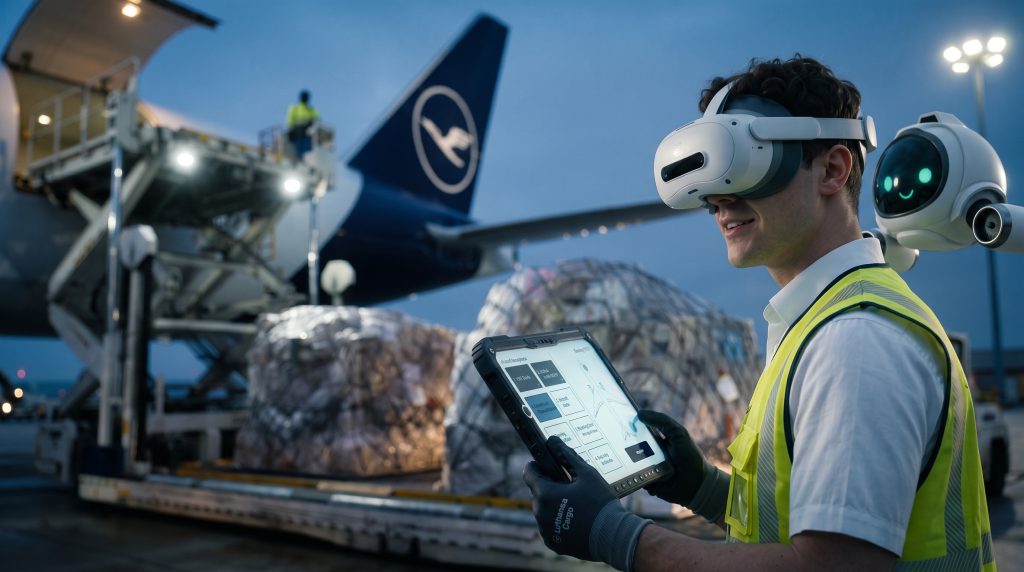
Ramp Agent XR Training
Lufthansa Cargo – Technical & Logistics
Targeted vocational training and upskilling for ramp agents in air cargo logistics: VR training and legally compliant assessment of all professional requirements for proper handling, process monitoring, and compliance with all safety standards during loading and unloading on the apron and across freighters such as the Boeing 777F.
- Up to 65% savings in training costs & 4x faster learning.
Technological Excellence: The Architecture Under the Hood
Building a certifiable, global aviation system required far more than an isolated VR app. Here is how our technology stack addresses Lufthansa’s challenges:
Digital Twins & 3D Asset Management
- Original CAD data from manufacturers (Boeing/Airbus) is frequently restricted by strict licensing and too heavy for real-time engines. We eliminated this barrier: we independently engineered aircraft types such as the A350 and Boeing 777F as high-precision digital twins via 3D scanning and reverse engineering—ensuring 100% IP ownership for the client.
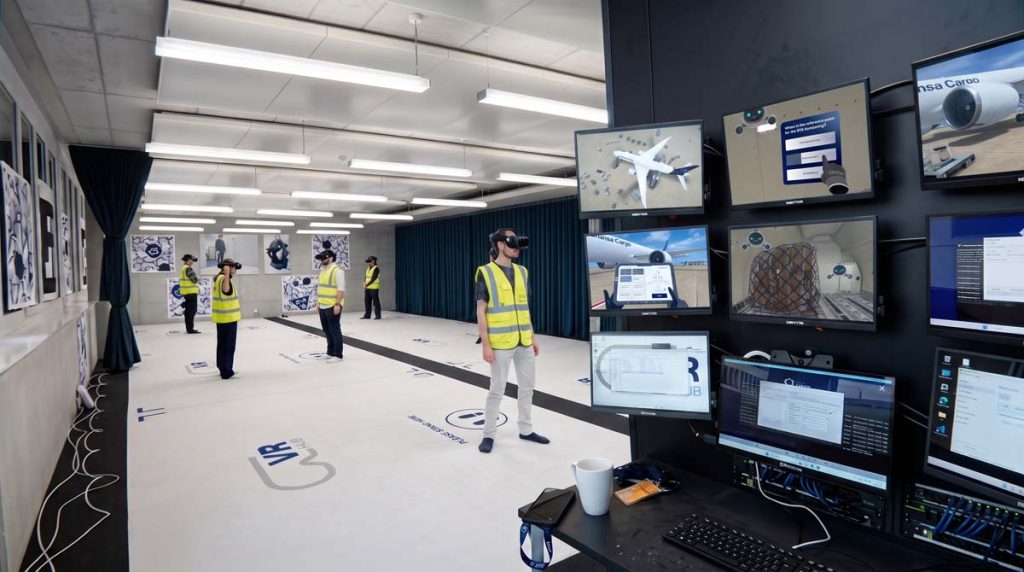
On-Site LBE & XR Hubs
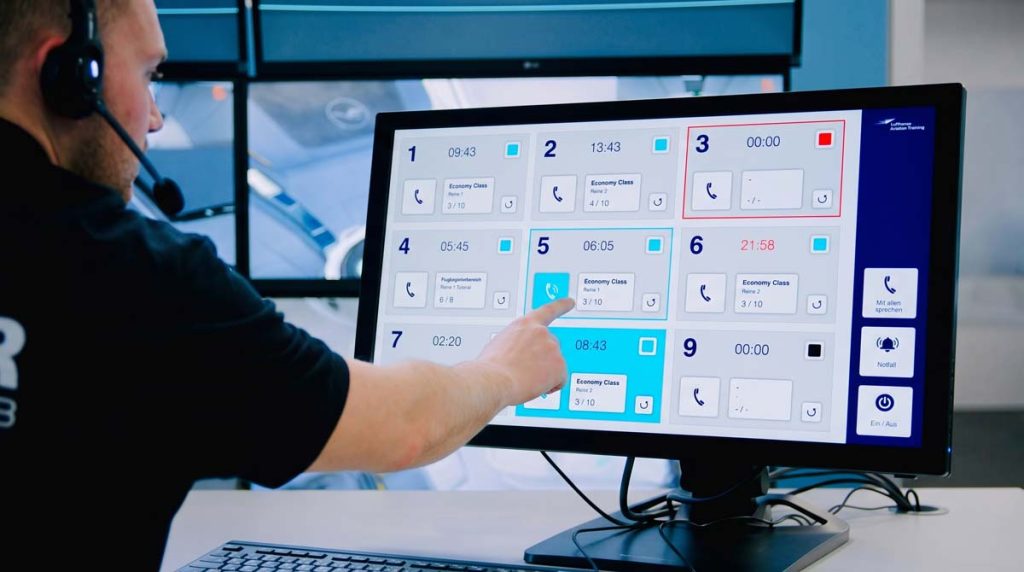
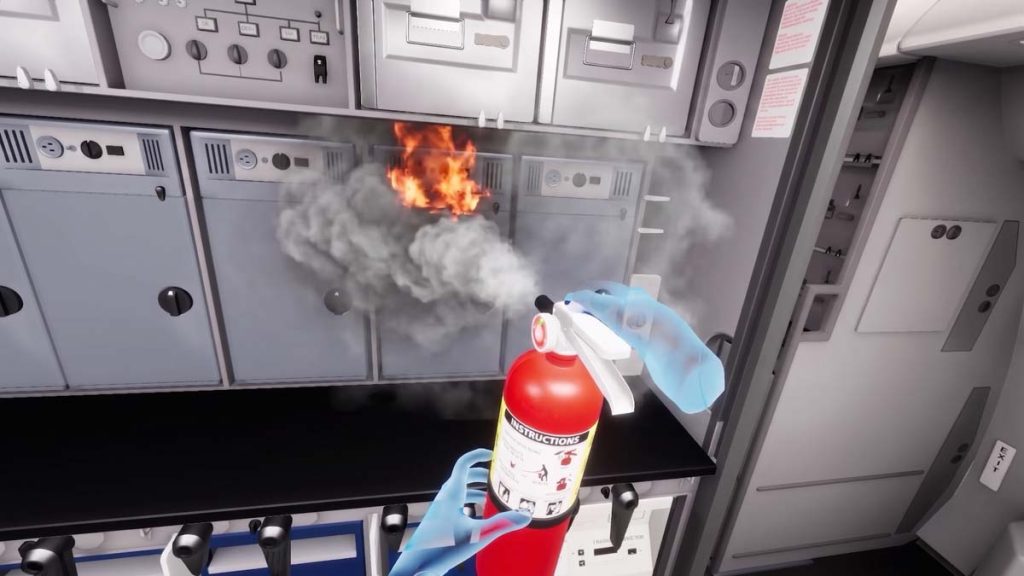
- In dedicated hubs, trainees interact synchronously within the same digital twin. Instructors seamlessly orchestrate the session via a control station, triggering critical emergency scenarios (e.g., in-cabin fires) at the touch of a button for official LBA qualification exams.
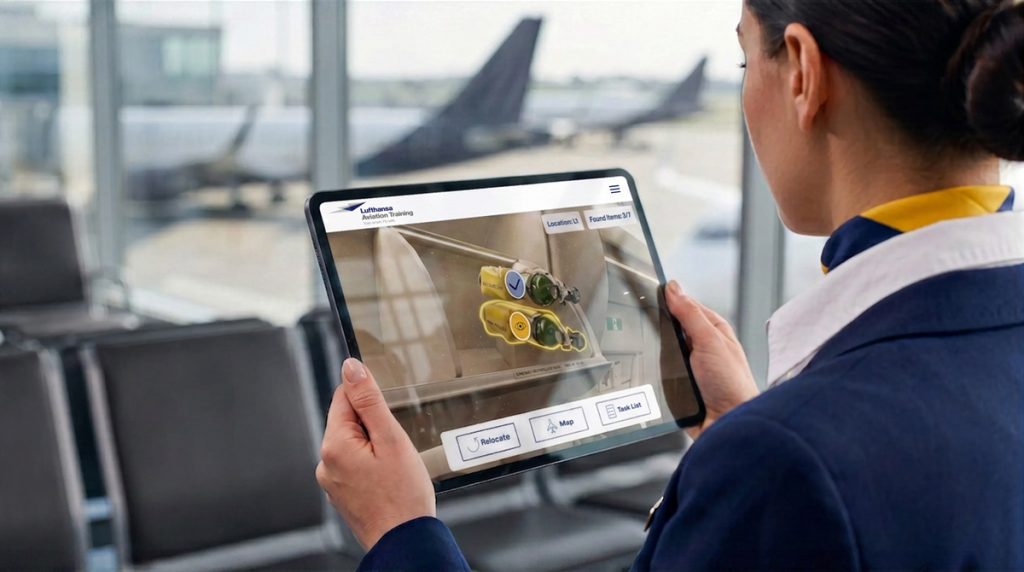
Global Remote Training
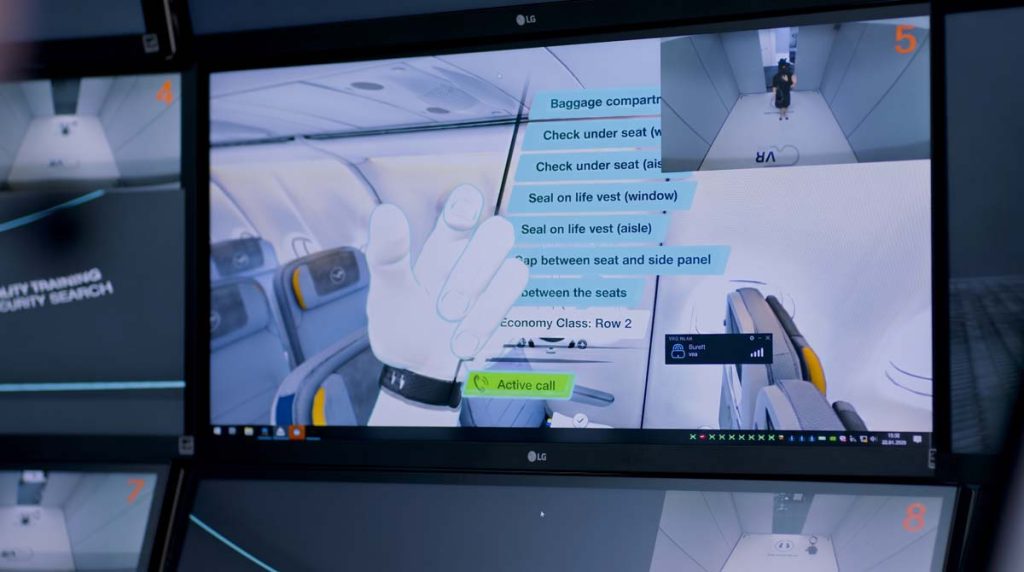
- A single instructor at the Frankfurt headquarters simultaneously monitors sessions across global sites and intervenes live, exactly as if standing beside the trainee. This cuts global instructor travel expenses by up to 80%.

Enterprise UX & „Zero-Tech-Fear“
- Voice-enabled interfaces and controller-free hand tracking replace complex menus. Trainees operate levers and switches naturally with their bare hands. This eliminates tech anxiety from second one, drives workforce adoption, and—unlike mouse clicks—builds genuine, life-saving muscle memory.
Hardware-Agnostic & Cross-Platform
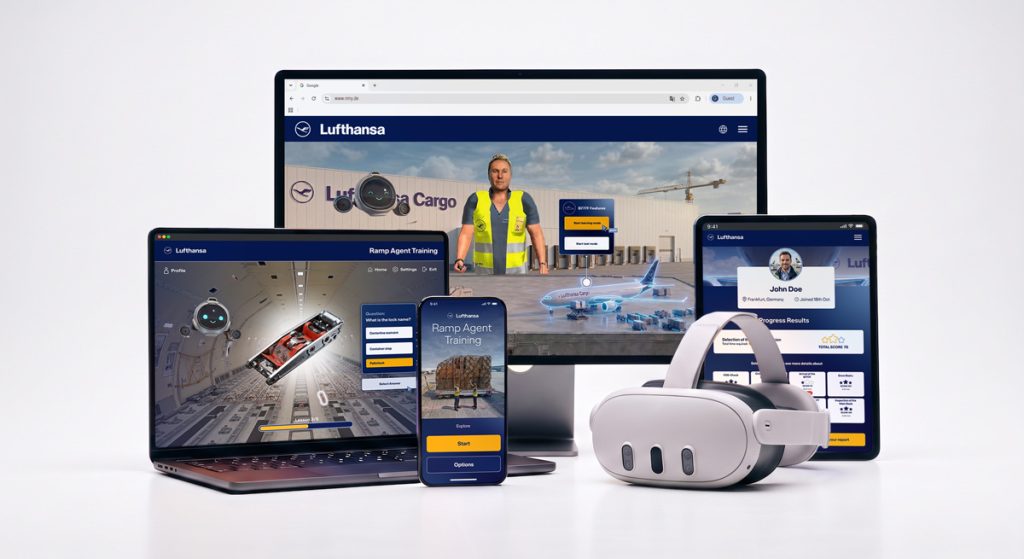
- The XR ecosystem extends far beyond VR headsets. While Lufthansa deploys standalone VR headsets for highly immersive stress training in XR hubs, the exact same 3D architecture scales as a pre-learning module to iPads, tablets, and desktop PCs. Trainees learn from anywhere, fully hardware-independent.

Automated LMS Integration | Zero-Admin
- We prevent data silos by synchronizing training certificates in real time with HR systems (e.g., SAP SuccessFactors) via SCORM/xAPI. In parallel, native APIs connect your PLM and asset management systems directly to the digital twin.

With NMY’s XR solution, we are cutting training costs for our ramp agents by up to 65% by minimizing unproductive instructor downtime. XR training provides the technological leverage we need to reduce real-world operational errors by up to 50%.
Momo Ruzic, Head of Operations (Stationsleiter Frankfurt), Lufthansa Cargo AG
The NMY System Operator: Decentralized Control & Remote Command Center
To manage this high volume of decentralized training, NMY built a centralized command center: the NMY System Operator.
Via an intuitive tablet or desktop dashboard, a single instructor monitors dozens of VR stations simultaneously in split-screen, assigns tasks, and conducts LBA examinations. At the touch of a button, they can inject dynamic, live stress scenarios such as smoke development or equipment failures.
Remote Control Station
- The dashboard functions as a borderless remote control station: a senior examiner at headquarters dials into live exams worldwide—regardless of the trainees’ physical location. At Lufthansa Cargo alone, this reduced instructor travel costs by approximately 80%.
The Human Factor: Empirical Acceptance Study
For enterprise technology to deliver sustainable results, it has to engage its users. An empirical study involving 378 real-world users underscores the exceptional workplace adoption of the NMY system:
98,4 %
Overall Satisfaction
- Rate the VR training as “Very Good” or “Good.” 85% proactively recommend it to their colleagues.
97,4 %
Practical Confidence
- Confirm higher self-confidence when applying procedures in day-to-day operations.
97,6 %
Intuitive Usability
- Controller-free hand tracking completely eliminates technology barriers (“Zero-Tech-Fear”).
98,9 %
In-Depth Understanding
- Interactive 3D features significantly deepen the retention of complex technical concepts over the long term.
Our XR platform is highly scalable, secure, and standardized. It enables the Lufthansa Group to efficiently orchestrate its massive qualification volume across all subsidiaries—without compromising on the rigorous standards of aviation safety.
Sebastian Demmerle, CEO NMY
The Takeaway for Your Industry: The Risk-Free Blueprint
The Lufthansa Group business case proves that spatial computing is ready for industrial scale. This is not an experiment, but a hardened enterprise architecture. What does this mean for your company in mechanical engineering, field service, or medical technology?
- Zero Development Risk: You do not need to build a software ecosystem from scratch. Because the entire foundation—from LBA-certified assessment pedagogy and the NMY System Operator to secure LMS integration—is proven and field-tested, standard project risks are eliminated.
- The Economic Leverage for Your Fleet Size: You do not need 20,000 employees for the system to pay off. In industrial manufacturing, ROI is driven by high-value machinery and avoided downtime.
- Rapid ROI: The moment you no longer block a multi-million-euro machine in a showroom for training sessions and eliminate travel costs for a team of 50 to 200 service engineers, the NMY architecture pays for itself within just a few months.
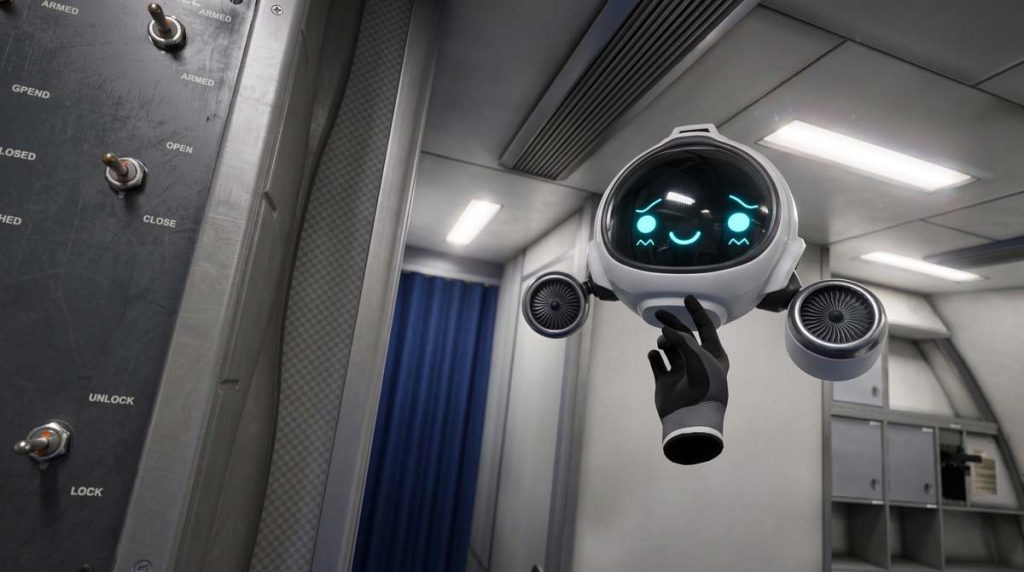
The B2B Innovation Lab in Frankfurt: Live Testing and Validation of XR & AI
Theory doesn’t sell innovation. Step into our exclusive Validation Lab, test real-world use cases live, and make the future of your business tangible.
- Test Real-World Use Cases: Experience fully functional industrial scenarios firsthand—from LBA-certified training modules like Lufthansa Cargo’s to digital twins and interactive collaboration spaces running on the latest enterprise hardware.
- Tech & ROI Sparring: Validate the feasibility, IT integration, and ROI of your own specific use case in direct collaboration with our lead engineers.
Case Studies & References
A selection of additional NMY XR training and operations applications in global deployment.


Let’s talk—no strings attached.
No endless email back-and-forth. Simply pick a convenient slot in my calendar for a brief video call. We will examine your use case and clarify directly what is technologically feasible and economically viable.